Flexible Education and Innovation Drive Malaysia's Startup Ecosystem
In an interview with Utusan Malaysia, ASBhive's Redza Shahid shares how flexible learning, smarter fundraising and ESG-led innovation will shape Malaysian startups.
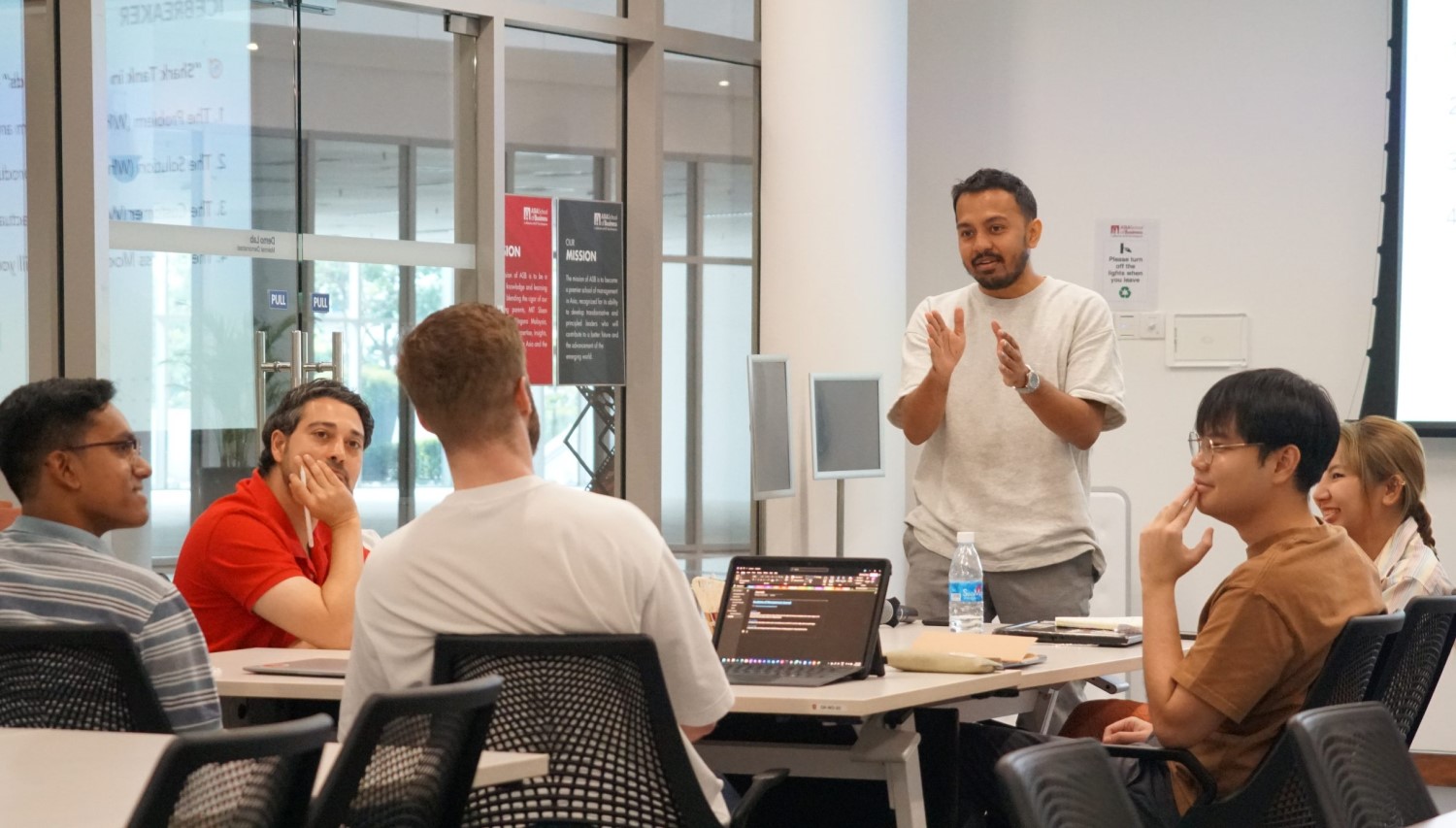
"Businesses need to go beyond flexibility by creating environments where employees can experiment." — Redza Shahid, Assistant Director, Innovation & Entrepreneurship Center, Asia School of Business
In an interview with Utusan Malaysia, Redza Shahid of ASB's Innovation & Entrepreneurship Center (IEC) — home of ASBhive — shared his view on talent, funding and the future of Malaysia's startup ecosystem.
The future of education and talent
The rise of gig work and industry certifications is reshaping Malaysia's talent pipeline: 70% of employers now prioritise practical skills and experience over formal qualifications (Randstad Malaysia, 2024). Young Malaysians are turning to flexible learning paths such as micro-credentials and online courses.
Institutions are responding with hybrid models. ASB's Agile Continuous Education (ACE) offers modular, stackable, industry-recognised certificates that can build into micro-credentials — including transferable academic credit for further study.
The funding challenge for SMEs and startups
Access to financing remains a key challenge, even as the ecosystem grows — with over RM18.6 billion raised by 19,000 startups and RM700 million allocated by the government in 2024. Founders often focus too much on product features rather than market scalability, value proposition and potential returns — what investors care about most.
His advice: build a compelling value narrative around scalability and real market impact, and grow an investor network through pitch events, industry forums and accelerator programmes.
How IEC bridges industry and entrepreneurial talent
IEC runs practical, industry-based programmes. Initiatives like ASBhive's Impact Accelerator help startups tackle social and environmental challenges while aligning with corporate sustainability agendas. Through capacity-building workshops, mentorship and industry site visits, founders build market-relevant skills and strong industry relationships — and an upcoming impact investment accelerator will equip startups to raise funding and scale.
Trends for the next five years
- Sustainability-driven innovation — startups focused on ESG solutions are better positioned to attract funding and partnerships, as shown by The Earthshot Prize and corporate initiatives from Grab and POS Malaysia.
- Digitalisation and AI — startups that harness AI, big data and fintech will have a competitive edge in Malaysia's digital economy push.
Adapting to Gen Z
Over 60% of Gen Z in Southeast Asia choose roles that drive social change (Deloitte, 2024). Beyond remote and hybrid options, they look for workplaces that encourage innovation, agility and entrepreneurial thinking — organisations that align with these values will attract and keep young talent.
Going regional and global
IEC equips startups with global market insight, mentorship and access to investment networks across three areas: market access, capacity building and investment readiness. Through collaborations with international accelerators such as MIT and Silicon Valley programmes, it supports continuous learning, peer exchange and exposure to global best practice — positioning Malaysia as a hub for sustainable innovation.
Source: "Pendidikan fleksibel, inovasi pacu ekosistem startup" by Hendra Winarno, Utusan Malaysia, 14 April 2025 (translated and summarised from Malay). Photo: Asia School of Business.